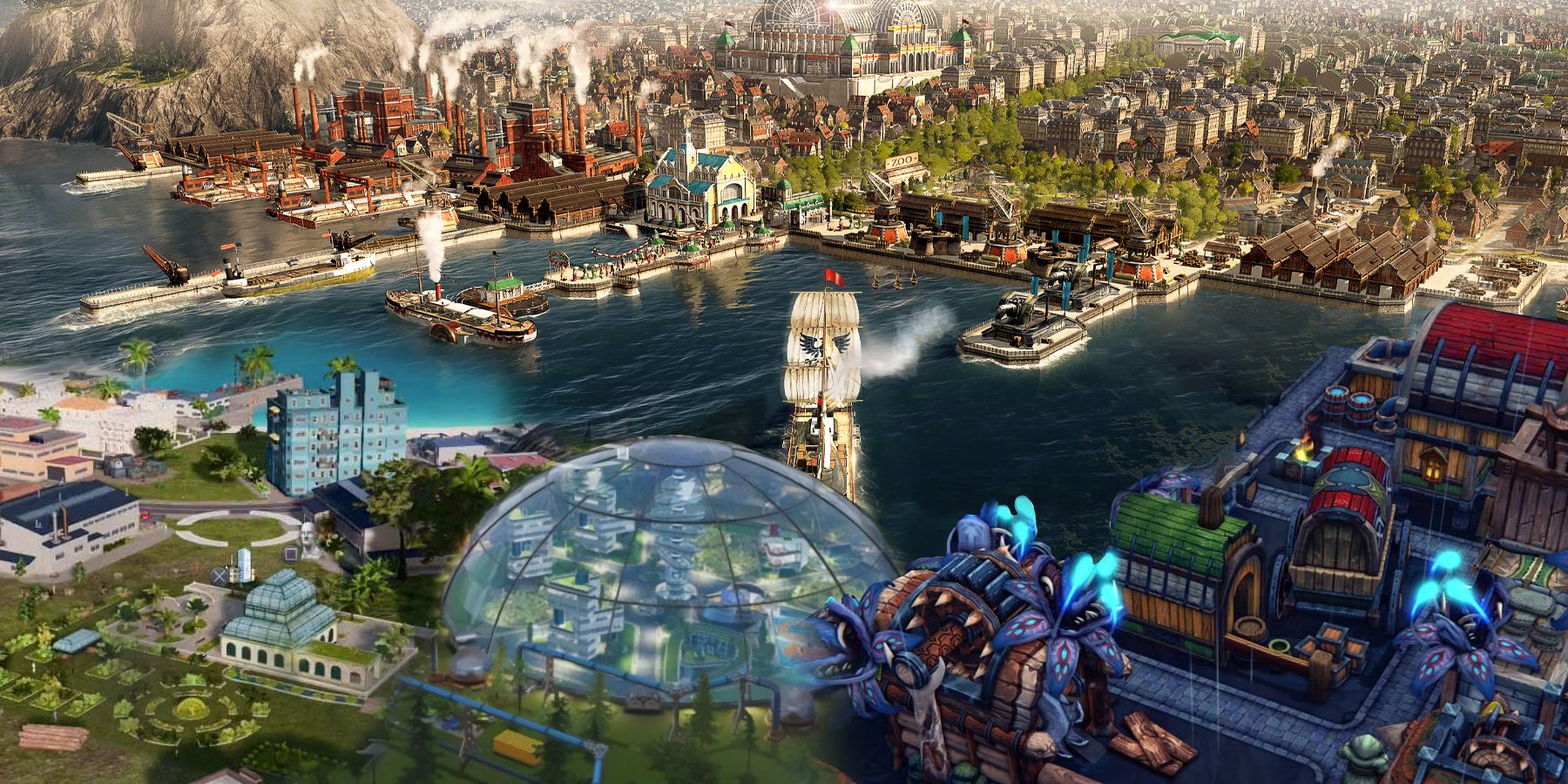
Most city building games promise control over urban sprawl, economic booms, and architectural vision. Few deliver meaningful strategy. Too many devolve into checklist management—zone, build, repeat—without consequence, tension, or depth. The best strategy city building games for PC go further. They blend urban design with layered systems, forcing players to make hard trade-offs between growth, sustainability, citizen happiness, and resource scarcity.
These aren’t idle clickers disguised as sims. They’re complex, dynamic environments where one bad policy can trigger a cascade of failure. This list focuses on games that prioritize genuine strategic depth over visual polish or passive progression. If you want to build a city that feels alive—not just a spreadsheet with skyrises—these are the titles worth your time.
What Defines a True Strategy City Builder?
Not every game with zoning grids and traffic lights qualifies as strategic. The distinction lies in systems interdependence, scalability of consequences, and player agency.
A strong strategy city building game forces decision-making under constraints. It simulates cause and effect across multiple domains—economy, environment, infrastructure, public opinion. You don’t just react; you anticipate. You manage supply chains, handle political pressure, and mitigate disasters—not as scripted events, but as emergent outcomes.
Key traits of top-tier strategy city builders: - Dynamic economies with fluctuating prices, labor markets, and trade - Resource scarcity that requires long-term planning - Citizen simulation where individual behaviors impact the whole - Modding support to extend longevity and customization - Meaningful failure states that teach, not punish unfairly
Games that lack these often feel sterile. You build, you expand, you win. There’s no friction—no real strategy.
Cities: Skylines – The Modern Benchmark
For nearly a decade, Cities: Skylines has defined the genre. Developed by Colossal Order and published by Paradox Interactive, it’s the rare title that balances accessibility with depth.
At launch in 2015, it outclassed SimCity (2013) with larger maps, deeper traffic AI, and superior mod support. Today, even with its sequel on the market, the original remains the go-to for players who want total control.
Why It Still Dominates
- Traffic simulation: The game’s AI tracks individual vehicles and citizens, making congestion a tangible problem, not a UI alert.
- Mod ecosystem: Over 300,000 mods on the Steam Workshop allow for total customization—from realistic pollution models to subway design tools.
- Industrial chains: Managing raw materials, processing, and exports adds an economic layer most city builders ignore.
- Disaster layer (DLC): Adds crisis management without turning the game into a survival sim.
Where it falls short: The base economy is static. Once you balance income and expenses, growth becomes automatic. The real challenge comes from self-imposed limits—realism mods, self-sufficiency goals, or infrastructure puzzles.
Still, for modders, planners, and traffic obsessives, Cities: Skylines is unmatched. It’s the foundation many modern city builders are built upon—and often fail to surpass.
Surviving the Future: Frostpunk
Frostpunk by 11 Bit Studios isn’t just a city builder. It’s a survival drama set in a frozen apocalypse. You don’t manage tax rates—you manage hope, dissent, and child labor laws.
The game drops you into a late-19th-century steampunk world where the coal-powered generator is the only source of heat. Expand too fast and you risk freezing your citizens. Move too slow, and starvation spreads.
Strategic Depth Through Morality
Frostpunk excels by tying city progression directly to ethical choices:
- Pass the Child Labor Law to maintain production, but risk public trust.
- Enforce Mandatory Overtime during blizzards—productivity rises, but so does unrest.
- Build Hospitals or Schools? You often can’t afford both.
The city grows vertically around the generator, forming concentric rings of survival. Each expansion requires coal, steel, and manpower—resources that dwindle as winter deepens.
Unlike traditional city builders, there’s no “win” state. You survive—barely—or you freeze. Many players report emotional attachment to their populations, a rare feat in strategy games.
Limitation: Replayability suffers after 2–3 full runs. The core loop is intense, but finite. However, the The Last Autumn and On the Edge expansions add meaningful variation.
For players wanting strategy with stakes, Frostpunk is essential.
Foundation: Medieval Urbanism Done
Right
While most city builders default to modern or sci-fi settings, Foundation embraces medieval urban planning with surprising depth.
Inspired by Anno and Banished, it strips away combat and focuses purely on organic city growth. You don’t zone—cities evolve from footpaths worn by citizens walking between homes, markets, and workplaces.
Organic Design and Real Constraints
Key features: - Pathfinding-driven layout: Buildings placed too far from roads reduce efficiency. Citizens create paths, which you then pave. - Crafting chains: Flour requires wheat farms, windmills, and bakeries—all needing workers and transport. - No grid enforcement: Unlike Skylines, you can’t force symmetry. The city grows naturally, often chaotically.
The absence of combat shifts focus to sustainability. Can your town support 500 people without collapsing under disease or famine? Can you balance forest management with housing?
Downsides: UI is clunky. Population AI can be erratic. But the core loop—design, observe, adapt—is deeply satisfying.
It’s the closest thing to a real urban planning sandbox in a pre-industrial world.
Offworld Trading Company: Capitalism as City Building
Most city builders treat economy as a backdrop. Offworld Trading Company (OTC), by Mohawk Games, flips the script: the city is the economy.
Set on Mars, you don’t build parks or police stations. You build extractors, refineries, and power plants—all to dominate the market.
Strategy Through Market Manipulation
OTC is real-time strategy with stock takeovers and supply shocks. Success comes not from construction speed, but from economic foresight:
- Bid up iron prices to bankrupt a rival.
- Short-sell water shares before triggering a drought via terraforming.
- Diversify early or risk collapse when demand shifts.
Buildings generate resources, but profit comes from timing. A solar farm is useless at night unless you’ve invested in batteries or fusion.
Unique advantage: Matches last 60–90 minutes. It’s fast, brutal, and intellectually exhausting—in the best way.
However, the learning curve is steep. New players often lose to invisible mechanisms: futures markets, patent wars, resource gluts.
But once you grasp it, OTC becomes the purest form of economic strategy in the genre.
Surviving Mars: Sci-Fi with Real
Science
Surviving Mars, from Haemimont Games, combines city building with planetary colonization and hard sci-fi constraints.

You don’t just build a city—you terraform a world. Oxygen levels, temperature, radiation, and dust storms all impact infrastructure and morale.
Long-Term Planning Under Pressure
What sets it apart: - Resource pipelines: Water from ice deposits must be purified, stored, and distributed. - Dome design: Each biodome houses citizens, but power, air, and leisure must be balanced. - Random events: AI anomalies, meteor strikes, and CO2 surges keep you on edge.
The tech tree is deep, with branching research in robotics, society, and engineering. You can automate with drones or invest in human colonies—each with trade-offs.
Biggest flaw: Late-game stagnation. Once domes are self-sufficient, the challenge drops. Some mods fix this, but the vanilla endgame lacks tension.
Still, for sci-fi fans who crave realism and systems thinking, Surviving Mars delivers.
Comparison: Which Game Fits Your
Play Style?
| Game | Best For | Complexity | Replay Value |
|---|---|---|---|
| Cities: Skylines | Creative planners, modders | Medium | Very High |
| Frostpunk | Narrative-driven players, moral dilemmas | High | Medium |
| Foundation | Organic design, medieval focus | Medium | Medium |
| Offworld Trading Company | Economic thinkers, fast matches | High | High |
| Surviving Mars | Sci-fi fans, system managers | High | Medium |
There’s no single “best” game. Cities: Skylines wins for accessibility and mod support. Frostpunk for emotional depth. OTC for pure strategy.
If you want one recommendation: start with Skylines, then test Frostpunk for intensity.
Hidden Gems Worth Your Time
Beyond the headliners, several underrated titles deserve attention:
- Aven Colony – Surviving Mars’s lesser-known cousin on alien worlds. Great for fans of colony management and alien flora mechanics.
- Banished – No resources, no trade. Just survival through careful population and food management. Minimalist and punishing.
- TheoTown – Mobile-inspired but deep. Lightweight, mod-friendly, ideal for quick sessions.
- Tropico 6 – Satirical dictatorship sim. Less city planning, more political maneuvering—but excellent for roleplay.
- Distant Worlds 2 – Not a pure city builder, but managing planetary development in a galaxy-wide empire adds staggering scale.
These won’t replace the heavyweights, but they diversify your strategy diet.
How to Avoid Common City Building Mistakes
Even experienced players fall into traps:
- Over-zoning early: Leads to instant debt. Start small. Let demand dictate growth.
- Ignoring transit hierarchy: Buses feeding metro lines beat endless roads. Traffic kills cities faster than disasters.
- Prioritizing looks over function: A beautiful city with no food supply collapses in five in-game years.
- Neglecting education and healthcare: Uneducated workers can’t staff high-tech buildings. Sick citizens don’t work.
- Forgetting long-term resource caps: In Surviving Mars, hitting the metal storage limit mid-crisis is a common failure point.
Use sandbox mode to test systems before going live. Or adopt a “realism ruleset”—no unlimited money, no undoing mistakes.
Final Verdict: Depth Over Decoration
The best strategy city building games for PC don’t just let you build—they force you to think. They simulate interlocking systems where every decision ripples outward. They punish complacency and reward foresight.
Cities: Skylines remains the most versatile. Frostpunk hits hardest emotionally. Offworld Trading Company is the sharpest intellectually.
But the real winner? You. Because in 2024, there’s a city builder for every kind of strategist—planner, economist, survivor, or visionary.
Pick one. Start small. Let your city teach you.